Bradley Brooke - Project Update
Concept Plan Scrutinized by Commission

A proposed 223-unit residential development known as Bradley Brooke drew criticism from members of the Planning Commission, and representatives of Naval Air Station Patuxent River (NAS PAX), during a lengthy public meeting on December 8th. Planning Commissioners questioned the traffic study, access limitations, and long-term compatibility with the nearby military installation.
The Bradley Brooke project includes 150 townhomes across 27 buildings and 73 single-family homes. Townhomes are clustered on private streets, while the single-family homes front the sole public road in the development. The plan exceeds county parking requirements, providing two spaces per unit—typically a driveway and a garage. The project’s engineer emphasized that no homes are located in the Air Installation Compatible Use Zones (AICUZ), and the higher density townhomes are located as far away from the base as possible.
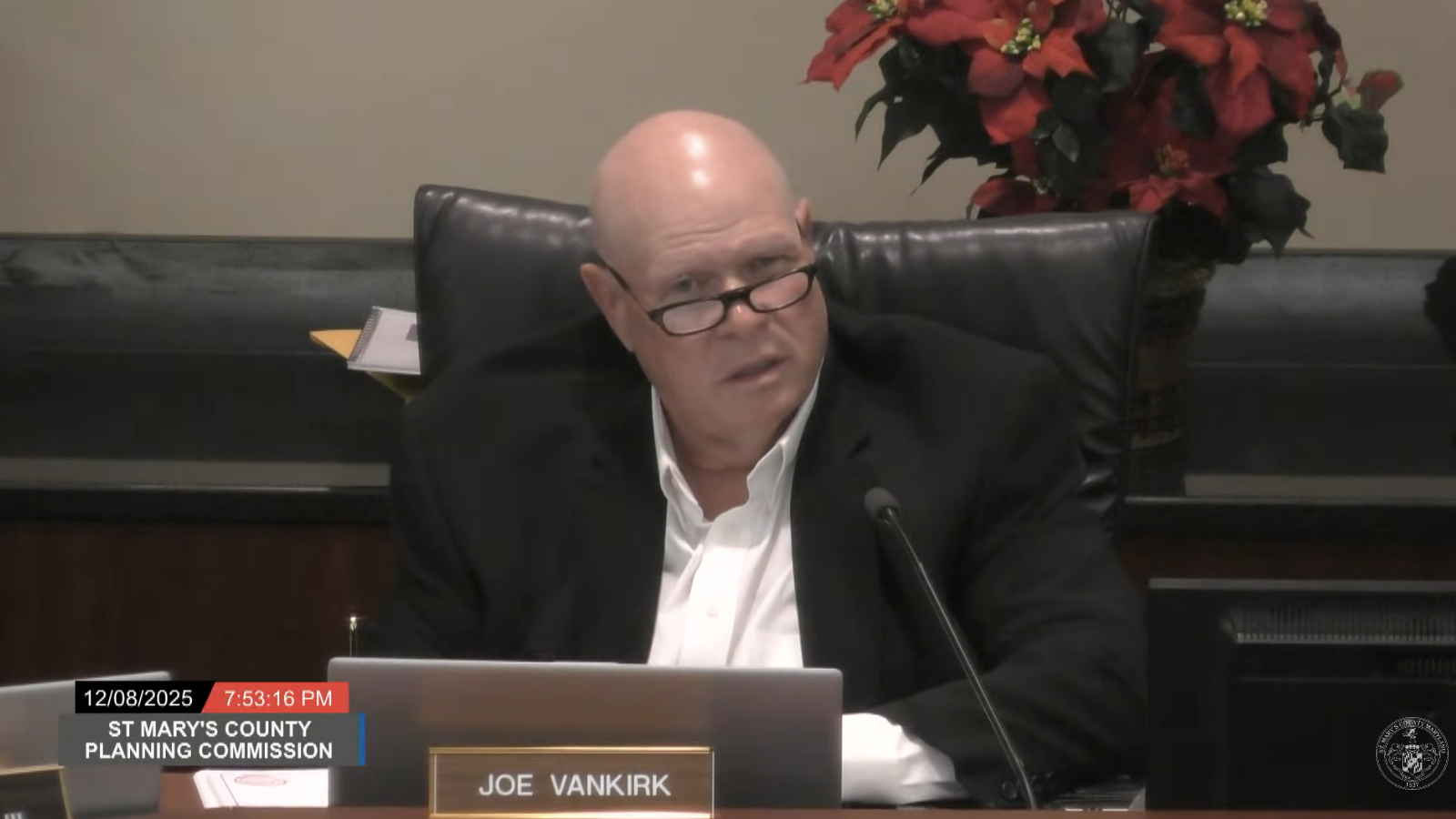
Planning Commissioner Joe VanKirk
Traffic quickly became the most contentious issue of the evening. Commissioner VanKirk questioned why the traffic impact study stopped at Shangri-La Drive and did not analyze nearby major intersections. “I haven’t seen a traffic study in ten years where they didn’t do surrounding signalized intersections,” VanKirk said, calling it “a poor choice.” He also pointed out the study lists the intersection of Shangri-La Drive and Willows Road as signalized although no traffic light is there.
Pressing further, VanKirk asked how many of the nearly 1600 daily trips generated by the development would travel north, to Great Mills Road. The traffic consultant estimated about 70% of those trips would use the route. With that volume of traffic, said VanKirk, “there should’ve been some mitigation [needed] by the developer.” Commission Chair Howard Thompson agreed that something was off with the traffic report, while Commissioner Delahay said “it looks like you’re just plugging in numbers and haven’t actually traveled the roads.”
But the county’s zoning ordinance, in this case, did not require intersections at either end of Willows Road to be analyzed. That’s why they weren’t included, said the consultant.

Rendering of Bradley Brooke
Subdivisions with more than 75 lots are “generally” required to have two entrances according to the regulating ordinance, but Bradley Brooke has only one. The project’s engineer and county staff acknowledged they had met to discuss the ordinance and its meaning, but the developers shouldn’t have left the meeting under the impression they were approved to move forward with one entrance, said county attorney John Houser.
In this case, because of geographic restrictions and lack of access to neighboring properties, there was not an option to create a second entrance/exit according to the project’s engineer. Commissioners debated whether a variance from the Board of Appeals may be necessary for the project to move forward.

Capt. Mark Zematis
Capt. Mark Zematis, the Commanding Officer at NAS PAX, read a prepared statement outlining the Navy’s objections to the development. Concerns hinged on impacts of aircraft noise and encroachment of development around the base. Recurring noise complaints from the surrounding community “do cause issues on our side,” said community planning liaison Hannah Padjewski.
The project’s attorney, Chris Longmore, reiterated that no homes fell within the 60 decibel noise contour zones currently adopted by the county. But Capt. Zematis stated an updated noise study, completed in 2019, changed the noise zones. Using that overlay, nearly two dozen homes fall within the 65-70 decibel area not recommended for development by the Navy. It was unclear whether the updated study had been provided to the county by the Navy, with a recommendation to adopt, something county staff will confirm.
Increased noise complaints could put NAS PAX at risk during future Base Realignment and Closure (BRAC) decisions. Commissioner St. Clair, who served on the local BRAC commission in the early 2000s, reflected on how easily this area could lose the base because of encroachment. St. Clair pointed to Naval Station Norfolk, which saw reductions because of a lack of planning to protect the area from over development. Several commissioners expressed worries about a similar issue happening here.
Commissioners also discussed open space calculations, with the applicant stating that certain side and rear yard areas can count as usable community open space under county rules. Even so, commissioners noted the proposal is “almost at the maximum” number of units realistically achievable on the property without additional zoning incentives, such as affordable housing provisions.
With unresolved questions about traffic modeling, road widths, bus access, and the implications of pending Navy studies, the Planning Commission voted to continue the hearing to January 12.
—————
Informed St. Mary’s remains paywall free for everyone with your support. Donate here to support this important work.