Cannabis Funds Public Hearing
St. Mary's County commissioners are expected to make a final decision July 21 on an ordinance that would establish how more than $1.5 million in state cannabis reinvestment funding can be distributed — including allowing some of the money to be spent outside Lexington Park, the county's only state-designated disproportionately impacted area.
The Commissioners will hold a public hearing on their proposed ordinance on July 14 at 6:30pm in Leonardtown. Comments can also be emailed to csmc@stmaryscountymd.gov.
When recreational cannabis became legal in Maryland in 2023, the General Assembly created the Community Repair and Reinvestment Fund (CRRF). The fund is supported by fees paid by medical cannabis businesses converting to adult-use licenses and by a portion of the state's cannabis sales tax.
State law allows the funding to be used for two purposes: supporting low-income communities through initiatives related to health, education, transportation, employment or homelessness services, and investing in areas designated by the state as disproportionately impacted by cannabis enforcement.
According to a January 2026 memorandum prepared by Deputy County Attorney John Houser, disproportionately impacted areas are communities that recorded cannabis possession charges at more than 150% of the state's 10-year average.
State data identifies only the 20653 ZIP code, which includes Lexington Park, as a disproportionately impacted area in St. Mary's County because of its history of cannabis possession charges.
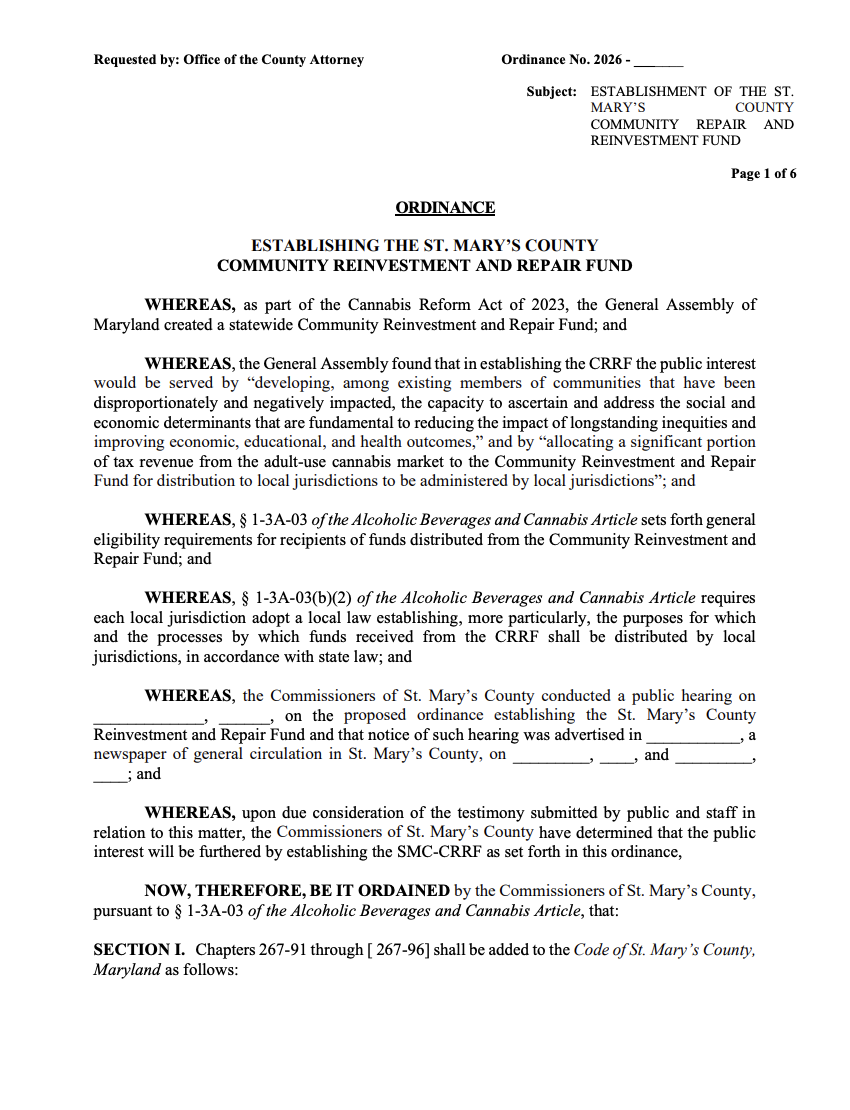
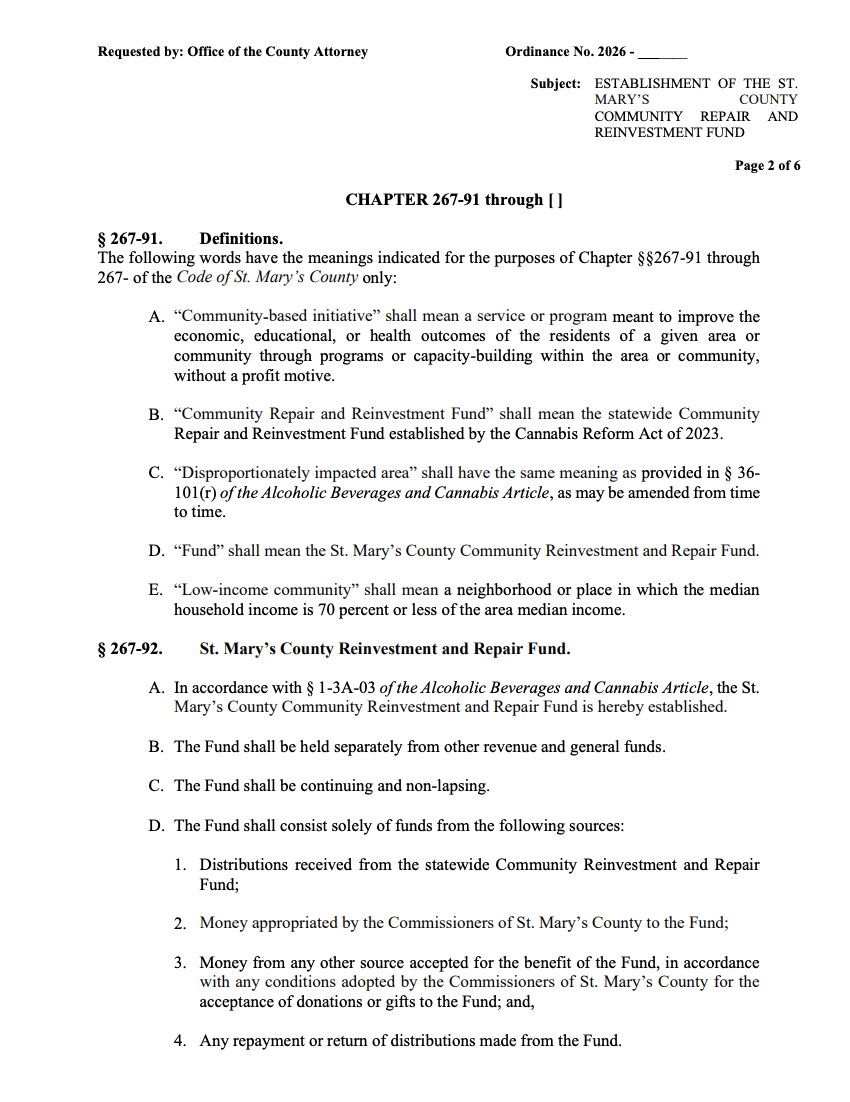
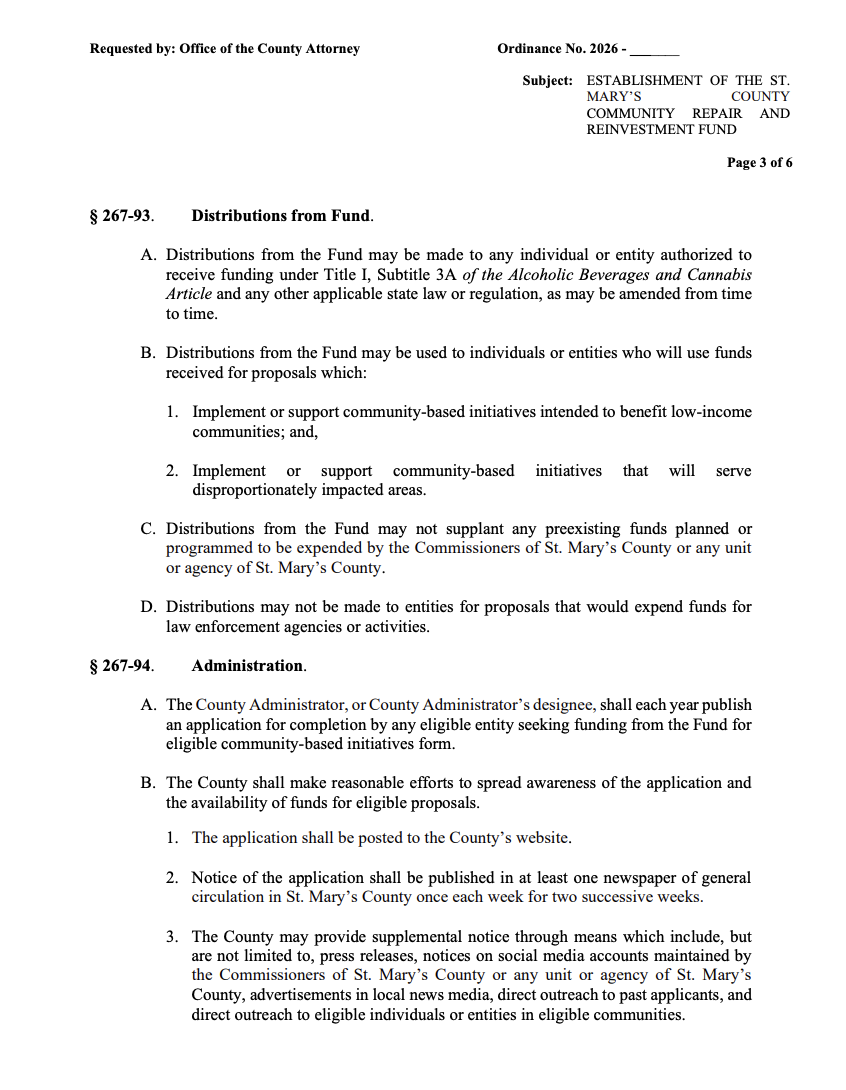
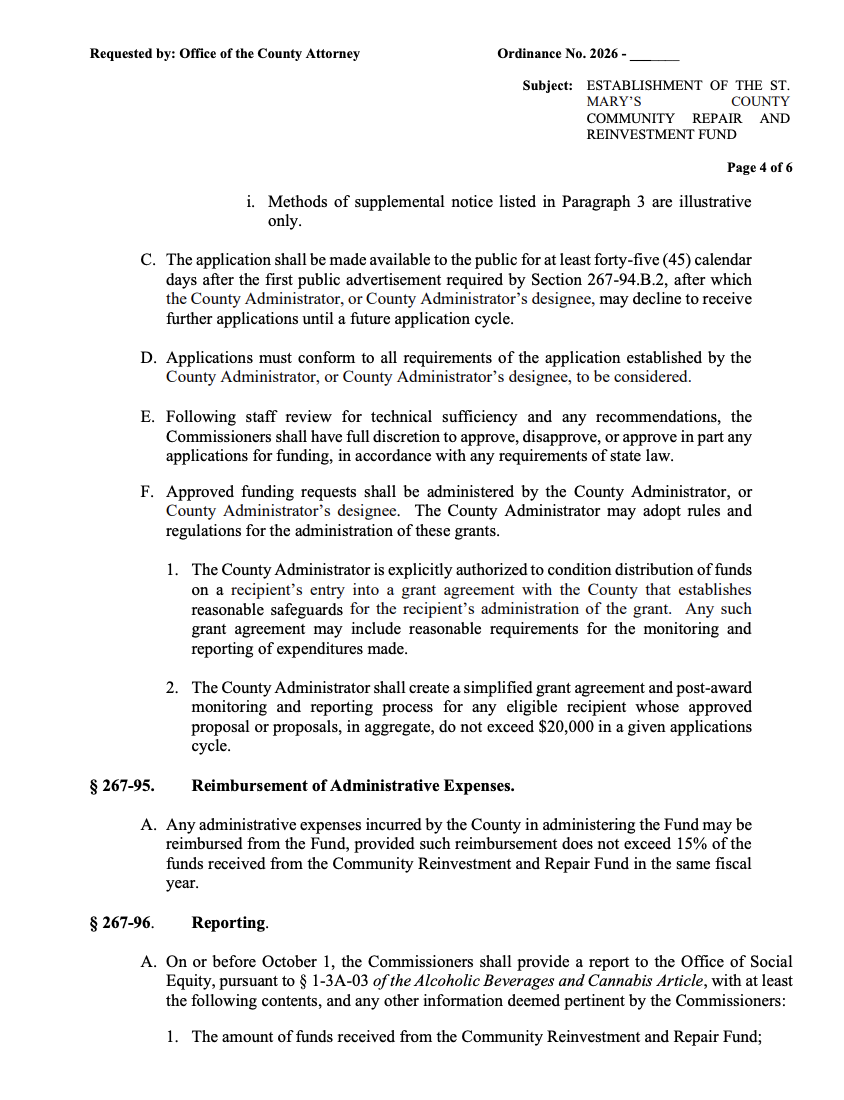
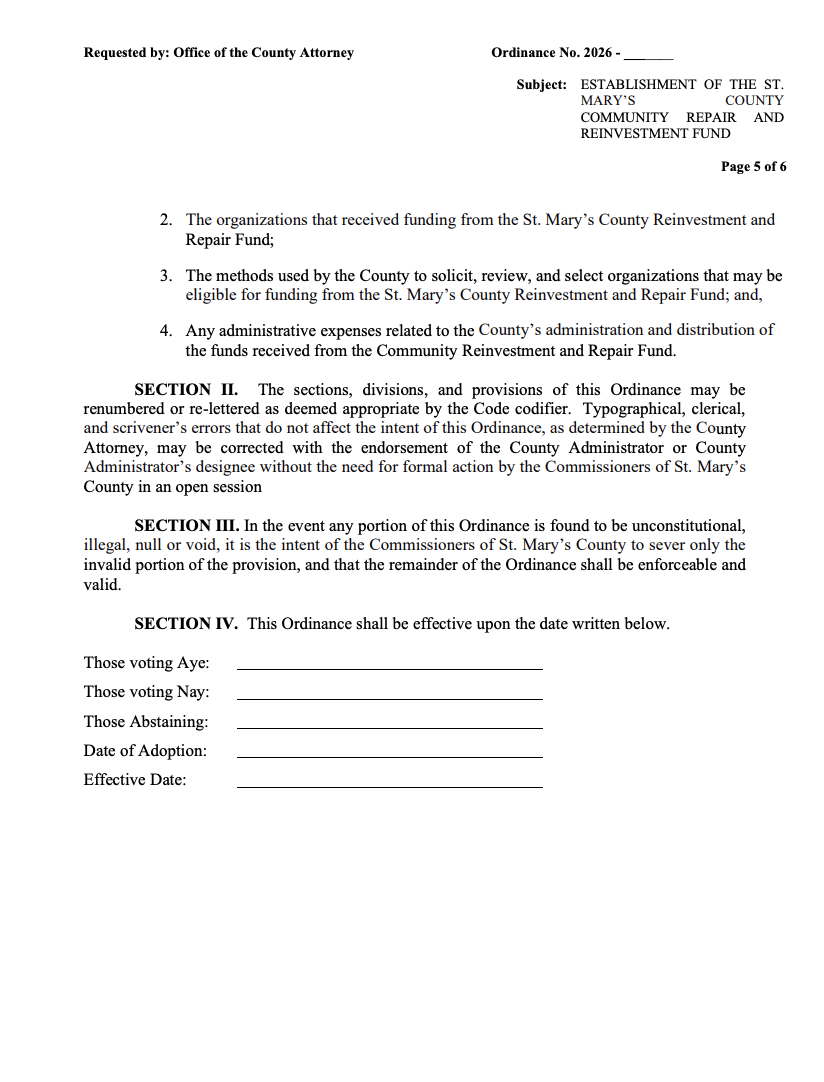
However, the proposed county ordinance also creates a separate eligibility category for low-income communities. As written, projects could qualify for funding outside Lexington Park if they serve neighborhoods meeting the ordinance's income requirements.
Through May 31, 2026, St. Mary's County has received $1,542,136.62 in CRRF funding.
Nearly two-thirds of that amount — $989,603.19 — came from fees paid by medical cannabis businesses converting to adult-use licenses. Based on funding received so far, Houser estimates the county will also receive about $240,000 annually in cannabis sales tax revenue through 2033.
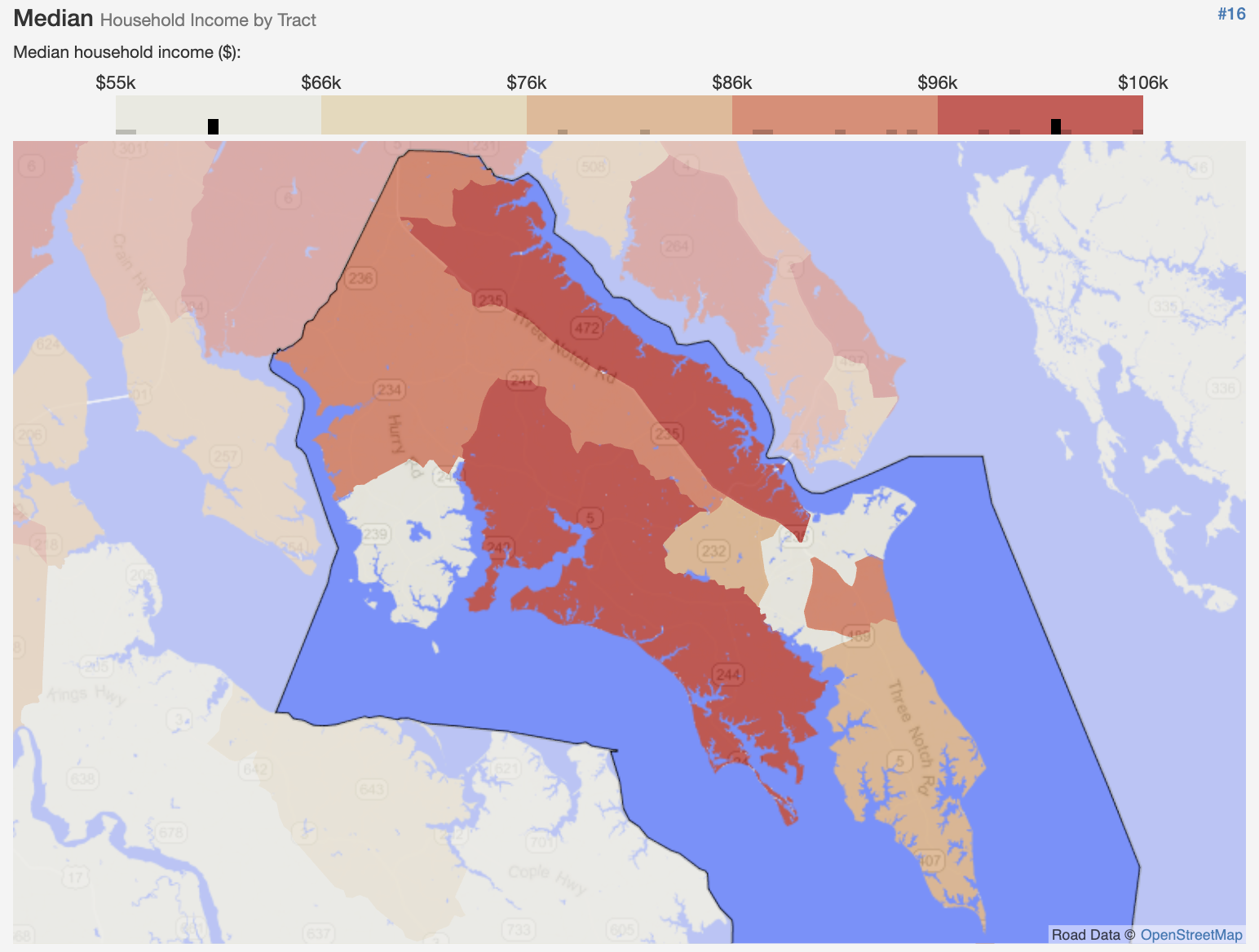
From Statistical Atlas, the lighter colors show lower income, and darker colors higher incomes.
The proposed ordinance defines a low-income community as a neighborhood where median household income is 70% or less of the Area Median Income (AMI).The income calculations used in the ordinance could make more communities eligible for funding than the state-designated disproportionately impacted area alone.
While Lexington Park contains the county's highest concentration of poverty, portions of 7th District also fall below the ordinance's proposed income threshold according to United States Census data.
On June 30, Maryland’s Office of Social Equity released emergency guidelines, active immediately, to further define CRRF usage. Those guidelines said a low-income community is an area within a qualified census tract, or an area where “at least 51 percent of households earn at or below 80% of the area median income” based on HUD data according to a memo issued for tomorrow’s public hearing by Deputy County Attorney John Houser.
The memo also highlights a difference in the State’s definition of a community-based organization versus what is currently written in the county’s draft ordinance. Houser notes that after the public hearing the ordinance will need to be amended to match State guidance.
The County Attorney's Office, or a designated representative, would develop the grant application and review process before making funding recommendations to the Board of County Commissioners for approval. The process would be repeated annually. It’s possible the current non-profit grant application process could be modified and used for this funding as well.
Commissioners have said they prefer using the money for “one-time, shovel-ready” projects because future annual funding is expected to be significantly lower than the initial distribution.
If commissioners approve the ordinance July 21, applications are scheduled to open Aug. 3. Funding recommendations are expected by Oct. 6, and the county must submit its first report to the Maryland Office of Social Equity by the end of October detailing how the money was awarded and spent.
___________
Informed St. Mary’s remains paywall free for everyone with your support. Donate here to support this important work.