Leonardtown May Restore School Impact Fee
A proposed ordinance that would restore school impact fees on new residential development in Leonardtown remains pending after the Town Council postponed discussion of the measure during its May 11 meeting.
Ordinance 234, titled "Development Impact Fees," was scheduled for first reading but was not discussed after a lengthy public hearing on the proposed Singletree Quadplex development occupied much of the council's meeting. The ordinance remains under consideration.
If adopted, the measure would amend the town's existing code and once again direct the collection of school impact fees on new residential development. The proposal comes amid an ongoing dispute between the St. Mary's County Commissioners and Leonardtown over how new development within the municipality should contribute to public school construction costs.
The disagreement traces back to changes adopted by the County Commissioners. Prior to July 1, 2023, Leonardtown collected public school impact fees that were remitted to the county. But the County Commissioners repealed the impact fee ordinance and replaced it with an excise tax.
In response, the Leonardtown Town Council repealed its own impact fee ordinance and stopped collecting school impact fees within town limits.
The county's authority to impose the excise tax was granted by the Maryland General Assembly through legislation requested by the County Commissioners and supported by the St. Mary's County Delegation. Since then, questions have emerged regarding whether lawmakers intended for the tax to apply within Leonardtown's municipal boundaries.
Several local officials have argued that the delegation did not intend for the excise tax to apply inside the town. However, no member of the county's legislative delegation has publicly stated that interpretation.
The issue returned to the forefront March 24 when the County Commissioners voted 4-1 to amend the excise tax ordinance. According to County Attorney Buffy Giddens, the revisions were intended to clarify that the tax applies to residential development within Leonardtown.
Commissioner Eric Colvin cast the lone dissenting vote. Colvin has opposed applying the excise tax within Leonardtown since discussions began. Commissioners Mike Hewitt and Scott Ostrow argued that residential development within the town should contribute to public school funding in the same manner as development elsewhere in the county.
"This is about fairness," Ostrow said during the March 24 discussion. "I can't tell someone in California, Great Mills, Lexington Park they have to pay this fee but Leonardtown doesn't."
Leonardtown officials have rejected the county's position. The town's attorney has issued a legal opinion concluding that the County Commissioners lack authority to unilaterally expand the application of the excise tax because the taxing authority was granted by the General Assembly, not created by county ordinance.
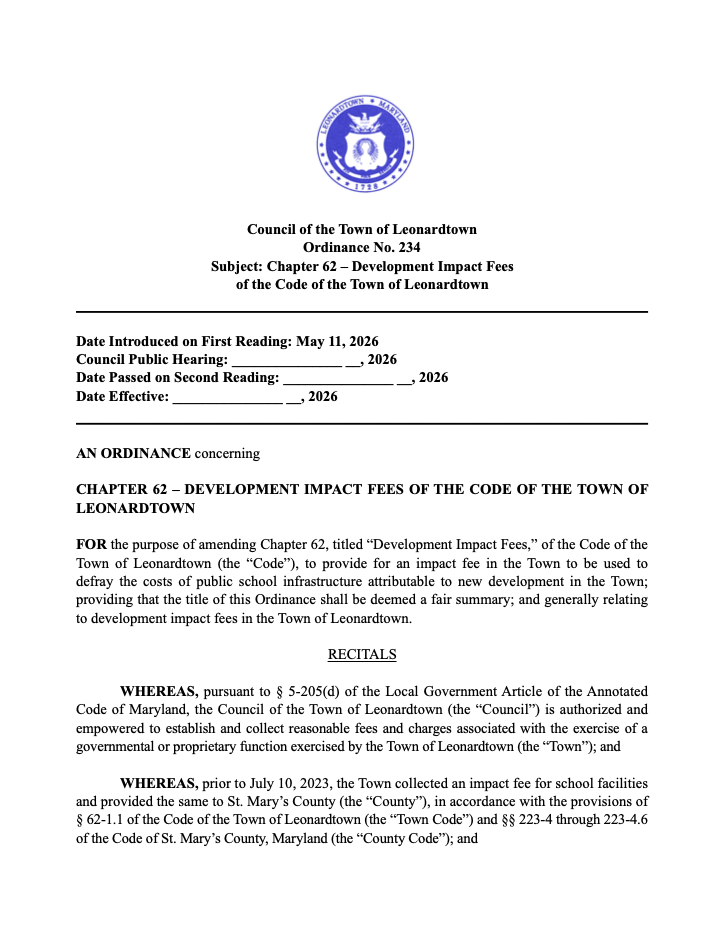
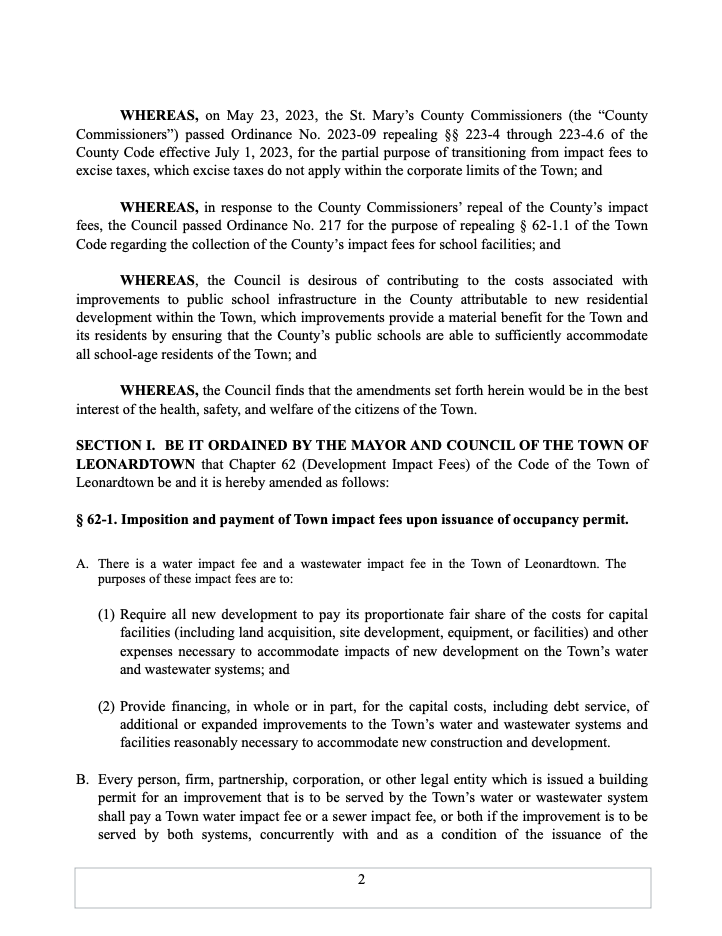
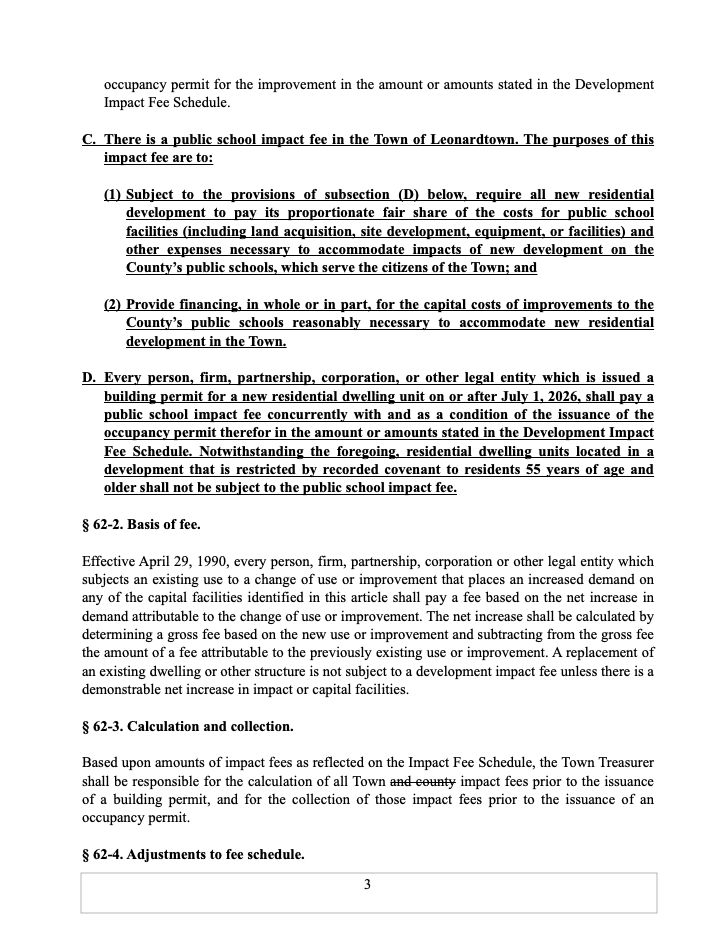
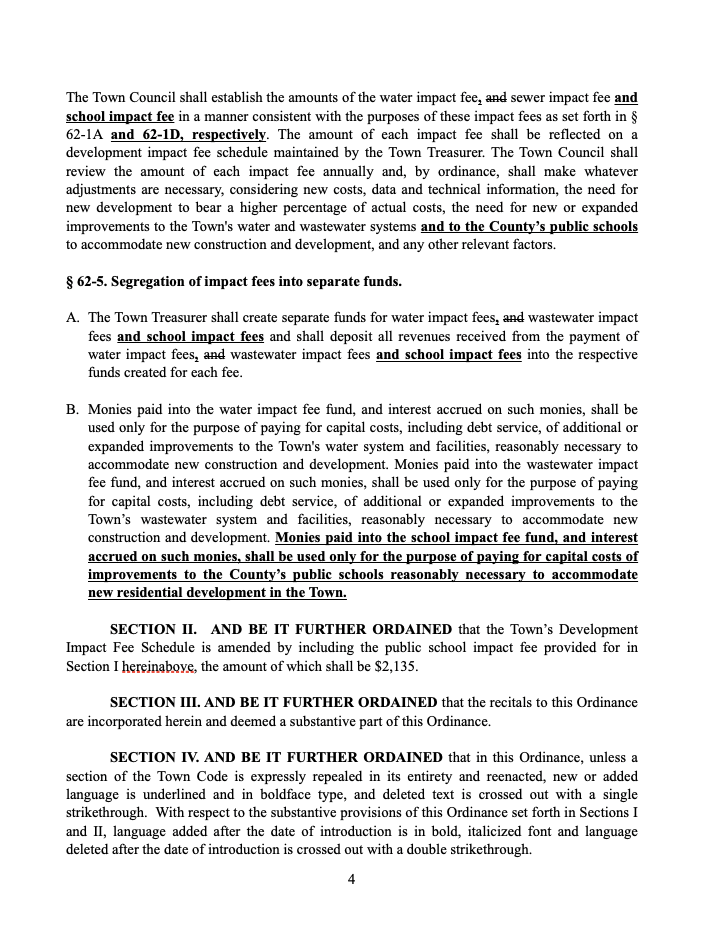
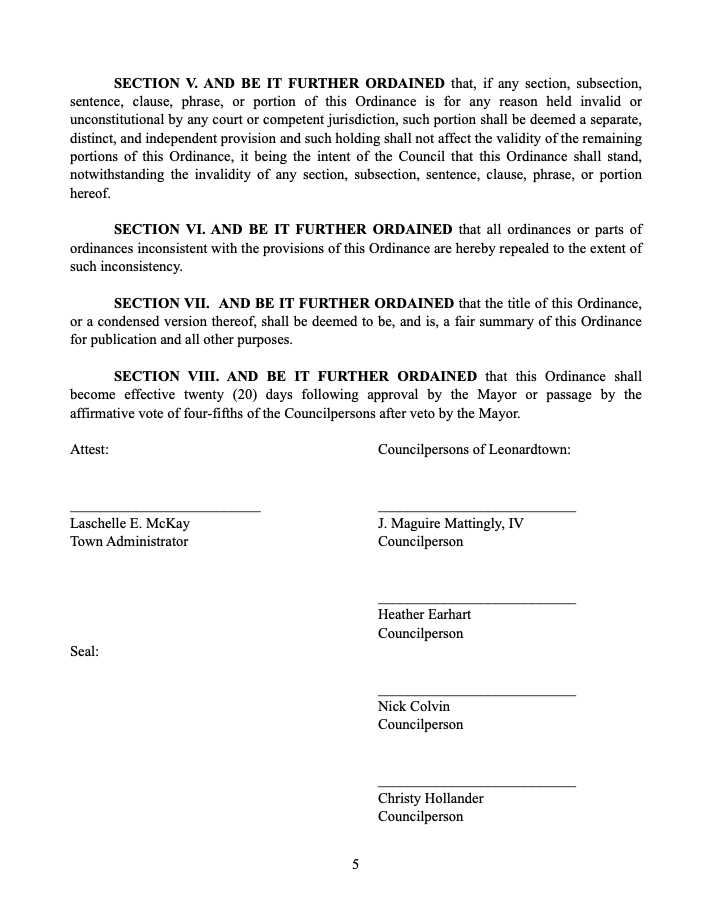
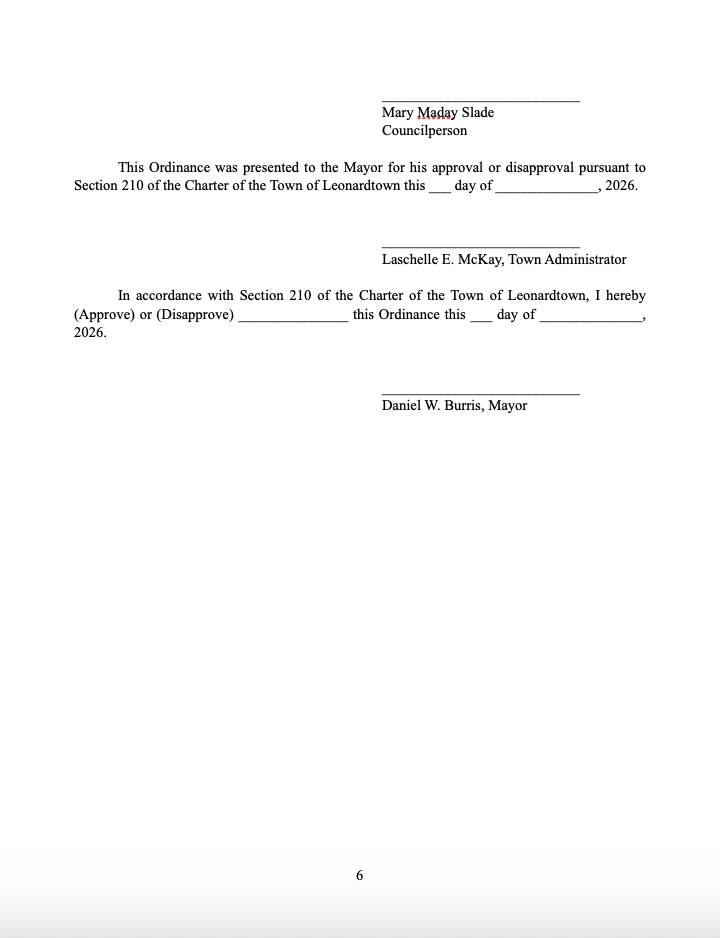
Under Ordinance 234, developers building in Leonardtown would be required to pay a school impact fee of $2,135 per dwelling unit. The ordinance states that new residential development must pay its "proportionate fair share of the costs for public school facilities."
The fee would apply to any person, business or legal entity receiving a residential building permit within the town. The only exemption would be for developments restricted by recorded covenant to residents age 55 and older.
Revenue generated through the fee, including accrued interest, would be dedicated to capital improvements for St. Mary's County Public Schools that are reasonably necessary to accommodate residential growth within Leonardtown.
The competing positions have created uncertainty over how future residential development in Leonardtown will be assessed school-related fees. While county officials maintain that the revised excise tax applies within town limits, Leonardtown continues to argue that it is not required to comply with the county's interpretation of the law.
Neither government has publicly outlined its next steps if the dispute remains unresolved, though the disagreement could ultimately require judicial intervention to determine which interpretation of the law prevails.
The proposed impact fee is substantially lower than the county's excise tax, which is set at $6,697 per dwelling unit. The county tax is intended to help fund infrastructure needs associated with growth, including schools, roads, public safety facilities, parks and recreation amenities.
Leonardtown also assesses separate impact fees on new development to support municipal infrastructure. According to a town release, developers pay roughly $24,000 per equivalent dwelling unit in water and sewer impact fees, with much of that revenue dedicated to improvements at the town's wastewater treatment plant, which expanded capacity in 2022 to accommodate future growth. The town also maintains its own roads and provides parks and recreation services.
Town officials have argued that applying the county's excise tax within Leonardtown would require new development to pay twice for some infrastructure categories. Leonardtown has maintained that a dedicated school impact fee is a more appropriate mechanism because it directs funding specifically toward public school construction while avoiding what town officials characterize as duplicative infrastructure charges.
___________
Informed St. Mary’s remains paywall free for everyone with your support. Donate here to support this important work.