SMCPS Faces Rising Electric & Fuel Costs
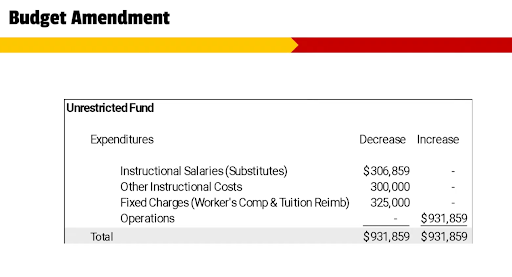
Rising utility and snow removal costs prompted the St. Mary’s County Board of Education to unanimously approve a $931,859 budget amendment Aug. 5, including $689,144 in additional utility expenses as electricity and fuel costs have increased.
from the SMCPS Presentation
The amendment also allocates $242,715 to cover snow removal costs that exceeded the school system’s budget. The funding was realigned from several areas of the school system’s budget, including $306,859 in instructional salary savings for substitute costs, $300,000 from other instructional costs, and $325,000 from workers’ compensation and tuition reimbursement.
Kimberly Howe, director of capital planning for St. Mary’s County Public Schools, told the Board of Education that energy costs are the “highest facility operational cost of the budget” each year.
from the SMCPS Presentation
Howe said electricity costs have increased as HVAC systems and other building infrastructure age. Increased technology use in classrooms has also contributed to electricity consumption, as has greater use of school buildings during evenings and weekends by outside organizations.
Multiple snow events, including the prolonged February storm that produced what Howe described as “snowcrete” and brought extended periods of below-freezing temperatures, increased both utility and snow removal costs.
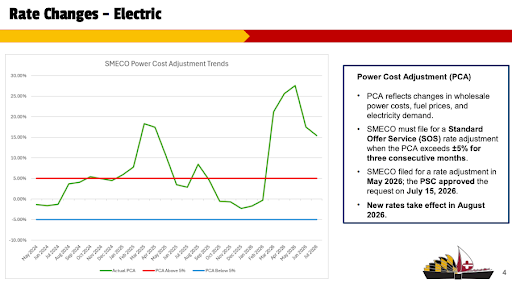
The additional costs come as St. Mary’s County Public Schools faces higher electricity rates. Howe said the SMECO filed for a rate adjustment that was approved by the Maryland Public Service Commission in July, with the increases taking effect in August.
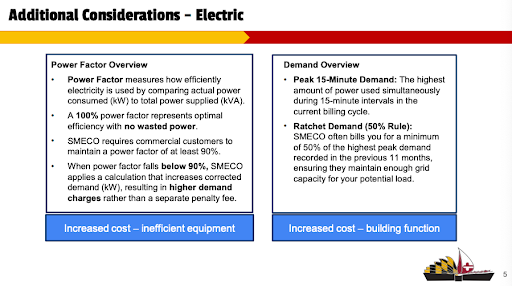
As a large commercial electricity customer, SMCPS is subject to demand charges that can be affected by the efficiency of its electrical systems. Howe said SMECO requires commercial customers to maintain a power factor of at least 90%. When the power factor falls below that level, she said, SMECO applies a calculation that increases corrected demand, resulting in higher demand charges rather than a separate penalty fee.
from the SMCPS Presentation
SMCPS also faces a “ratchet demand” charge, under which SMECO bills customers for a minimum of 50% of the highest peak demand recorded during the previous 11 months. The charge is intended to ensure that sufficient grid capacity is maintained for a customer’s potential load.
SMCPS expects to have a better understanding of the impact of SMECO’s rate increases by the end of September. The school system will also have additional data by the end of December to adjust projections for fuel costs.
from the SMCPS Presentation
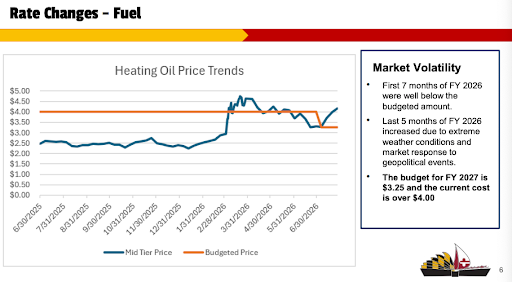
Fuel prices have remained above the $3.25 per gallon assumption included in the school system’s fiscal 2027 budget for the past five months.
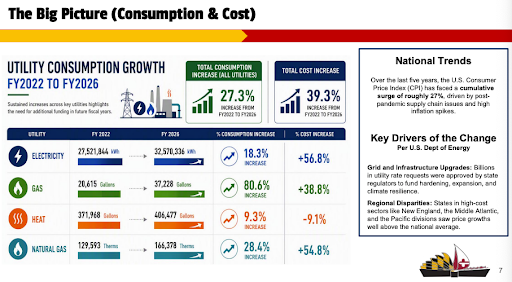
from the SMCPS Presentation
Electricity prices have also been under broader pressure across the Mid-Atlantic region. The region is served by PJM Interconnection, which operates the electric grid and wholesale electricity markets across all or portions of 13 states and the District of Columbia. Northern Virginia, home to the world’s largest concentration of data centers, has experienced significant growth in electricity demand associated with data center development, adding to broader discussions about the region’s energy infrastructure and electricity costs.
During the meeting, Board of Education member Josh Guy asked what the school system has done to address aging infrastructure and reduce energy costs.
Howe said most of SMCPS’ capital improvement projects involve replacing equipment that has reached the end of its useful life or making strategic improvements intended to increase efficiency.