Honoring History on Juneteenth
As communities across the nation prepare to celebrate Juneteenth, St. Mary’s County offers several opportunities to learn about and reflect on the contributions, struggles, and achievements of local African Americans whose impact continues to shape the community today.
One of the most significant tributes to local history is the African American Monument at Elmer Brown Freedom Park in Lexington Park. Dedicated in 2000, the monument was the result of a vision that began in 1994 and was brought to life through the efforts of the Unified Committee for Afro-American Contributions (UCAC).
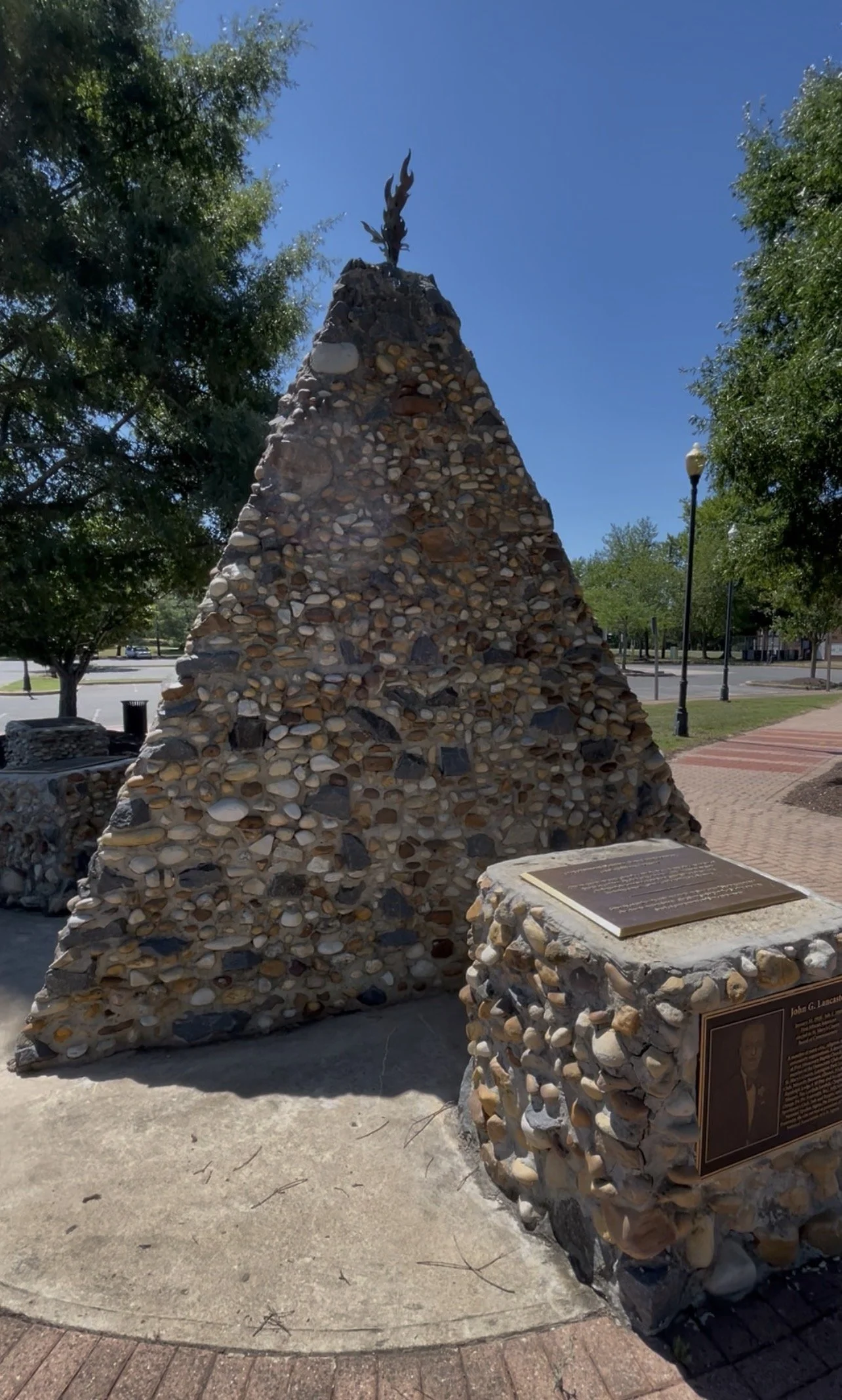
African American Monument at Elmer Brown Freedom Park
The monument features a pyramid constructed from natural stone and surrounded by six pedestals displaying bronze plaques. The four-sided base symbolizes creativity, survival, strength, and multicultural participation in building the St. Mary’s County community, as described on the UCAC’s website. Inspired by the hymn Rough Side of the Mountain, the monument’s stones represent the diverse accomplishments and experiences of African Americans throughout the county's history.
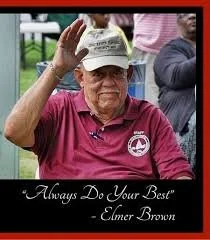
Elmer Brown Sr.
Image from the Southern Maryland Equity in History Coalition
According to UCAC founder Elmer Brown Sr., “the stones and the shape of the monument represent the difficult struggle of Blacks climbing the rough side of the mountain to get to the other side.” Members of the UCAC personally gathered the stones from local sand pits and carried them to the site in five-gallon buckets. At the top of the pyramid, an eternal flame symbolizes the enduring presence of ancestors and the passing of their legacy to future generations.
Brown himself is among the community leaders honored at the memorial. Born in Drayden, he managed the Blue Jay Motel in Waldorf, a business listed in the historic Green Book, which identified safe accommodations for African American travelers during segregation. He later managed the Tubman Douglas Estates housing development in Great Mills and operated a printing and maintenance business in Drayden.
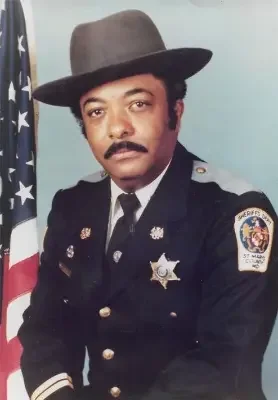
Sheriff Joe Lee Somerville
Also honored is Sheriff Joe Lee Somerville Sr., who became the first African American sheriff in St. Mary’s County, and in Maryland, and only the sixth in the United States. Appointed in 1977 to complete his predecessor’s term, Somerville won election the following year. At his swearing-in ceremony, he reflected on the significance of the moment, saying, “I say that we broke history when the Ark and Dove landed. That was a day of tolerance and celebration. Today, I feel the same with me being sworn in as sheriff and representing the people in St. Mary’s County.”
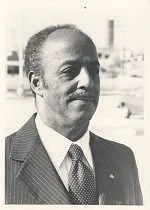
John G. Lancaster
Image from St. Mary’s County Historical Society.
The monument also recognizes John G. Lancaster, the first African American elected to the St. Mary’s County Board of County Commissioners. After moving to the county from Virginia in 1957, Lancaster became deeply involved in civic life, serving as chair of both the Housing Authority and Youth Commission while remaining active in the NAACP. He was elected county commissioner in 1986 and reelected in 1990. In recognition of his service, John G. Lancaster Park was dedicated in his honor in 2001.
The county’s African American history is also commemorated at the United States Colored Troops Memorial, located at Lancaster Park in Lexington Park. Unveiled in 2012, the memorial pays special tribute to 700 soldiers from St. Mary’s County who fought for the Union Army during the Civil War. Among those honored are Pvt. William H. Barnes and Sgt. James H. Harris, local soldiers who earned the Medal of Honor for extraordinary bravery during the Battle of New Market Heights, Virginia, in September 1864 while serving in the 38th United States Colored Troops during the Civil War.
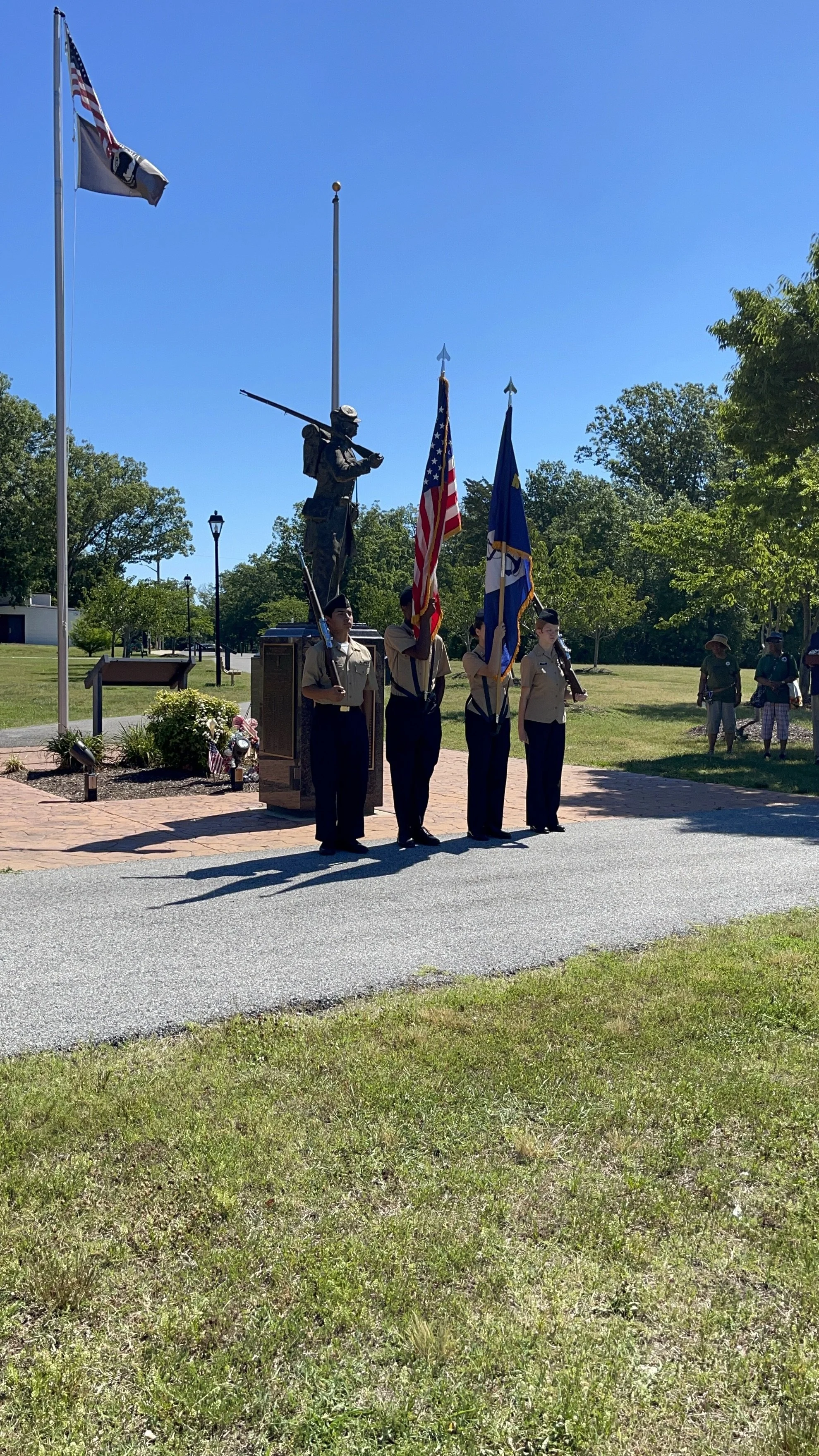
United States Color Troops Memorial
The memorial was the vision of Idolia Shubrooks of Park Hall, whose grandfather served as part of the United States Colored Troops. In partnership with historian Agnes Kane Callum, who extensively researched her own family history at Sotterley, and the Sons of Union Veterans of the Civil War, Shubrooks made her vision a reality through twenty years of advocacy.
Visitors interested in learning more can explore the United States Colored Troops Interpretive Center, housed in a renovated former Flat Tops building. The center features exhibits highlighting the lives of Barnes, Harris, and other local African American soldiers who fought for the Union. Additional exhibits examine the history of segregation in St. Mary’s County’s school system and the broader African American experience in Southern Maryland.
In recognition of Juneteenth, the Interpretive Center will be open free of charge June 19 through June 21 from 11 a.m. to 2 p.m. each day, providing residents and visitors an opportunity to connect with a vital part of the county’s history.
Together, these monuments and exhibits serve as lasting reminders of the resilience, leadership, and contributions of African Americans in St. Mary’s County—stories that continue to inspire future generations while preserving an important chapter of the community’s shared heritage.